


When Your Insurer Says “We Need You Under Oath”: A Florida Policyholder’s Guide
Key Takeaways: An examination under oath (EUO) is a formal, recorded proceeding where an insurance company’s attorney questions a sworn policyholder about a property insurance claim. In Florida, the duty to sit for an EUO arises from the policy’s “duties after loss” conditions, and related statutory provisions in Chapter 627, such as § 627.7152, recognize EUOs and recorded statements as conditions precedent to suit. Insurers use EUOs to verify ownership, occupancy, the date and cause of loss, scope of damage, and values claimed. An EUO differs from an informal recorded statement and from regulatory examinations under Fla. Stat. § 624.3161(7). Cooperation is contractual, and unreasonable refusal can jeopardize benefits, though policyholders retain rights under the Homeowner Claims Bill of Rights (Fla. Stat. § 627.7142) and payment timelines (Fla. Stat. § 627.70131). Careful preparation, organized records, and truthful answers provide the strongest protections, as material misrepresentation defenses frequently follow examinations. If denied, the contract claim must generally be resolved first, as Fla. Stat. § 624.1551 requires adverse adjudication before a property insurance bad faith action may proceed.
An examination under oath (EUO) is a formal, recorded proceeding where an insurance company’s attorney questions a policyholder about a property claim while sworn to tell the truth. Most Florida property policies treat it as a duty owed by the insured, arising from policy language itself. Florida statutes address EUOs in specific contexts, such as § 627.7152, which requires assignment agreements to include EUOs and recorded statements reasonably necessary and related to the claim as conditions precedent to filing suit.
If you have received an EUO demand after a hurricane, water loss, fire, or hail claim, the team at Kuhn Raslavich, P.A. can help you prepare and protect your rights. Call 877-352-7767 or contact us now to discuss your situation before questioning.
What Is an EUO and Why Insurers Use It
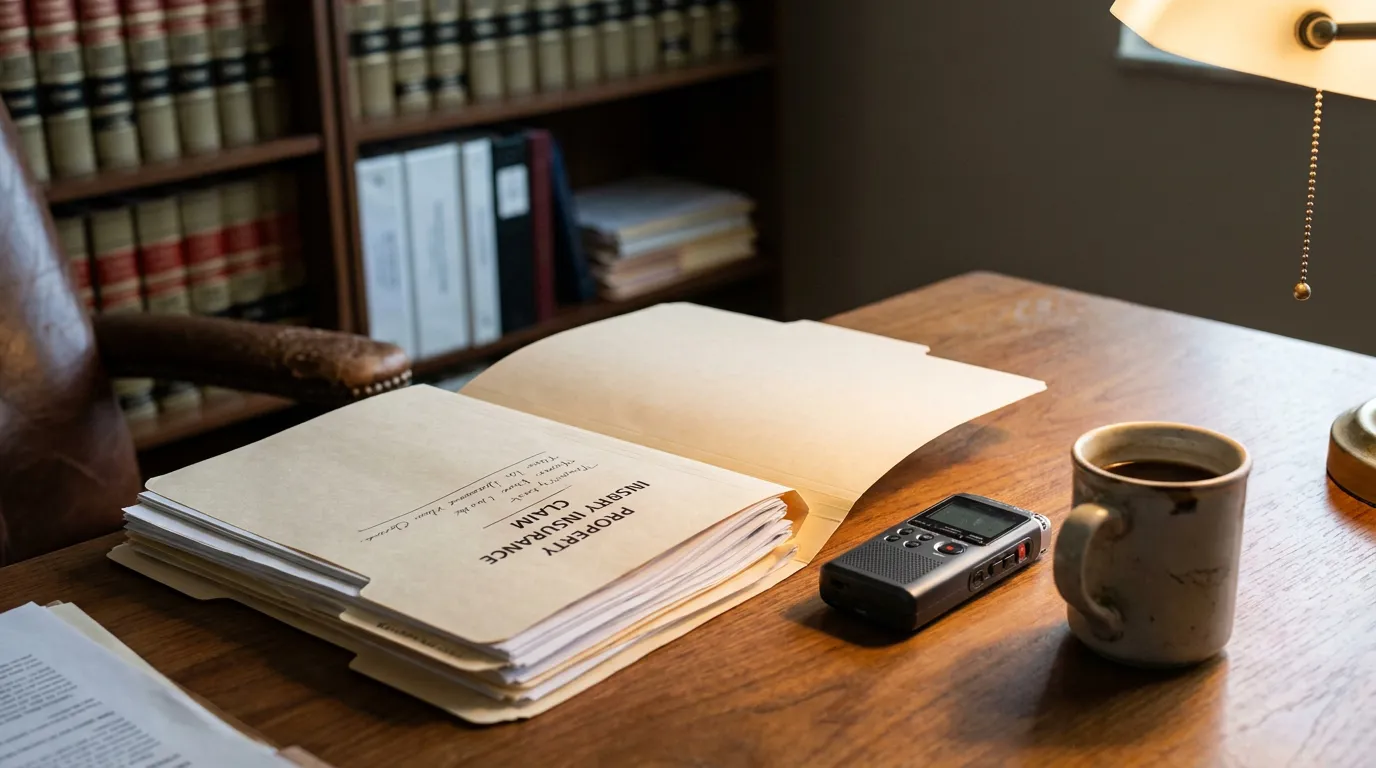
An EUO is a sworn examination conducted under the authority of the insurance policy, not court supervision. A court reporter is typically present, an oath is administered, and the insurer’s counsel asks questions about the loss, property, finances, prior claims, repairs, and documents produced. Because testimony is under oath, false statements carry serious consequences, including policy defenses and potential exposure under Florida’s insurance fraud and perjury statutes.
Insurers use EUOs to test accuracy and completeness of information in the claim file. This includes verifying ownership, occupancy, the date and cause of loss, scope of damage, and value claimed. An EUO typically follows a document request, and questions track records received or believed missing.
The EUO Is Part of a Regulated Investigation, Not an Ad Hoc Demand
Florida law requires structure in claims investigations. Under Fla. Stat. § 627.4108(1), authorized residential property insurers must create and use claims-handling manuals with written guidelines for receiving, reviewing, investigating, estimating, paying or denying, and closing claims that comply with the Insurance Code and usual industry practices. These are regulatory obligations that do not create a private right of action for policyholders.
These provisions frame the EUO as one tool within a documented process. An insurer’s right to investigate is real, but operates alongside statutory duties under Chapter 627 of the Florida Statutes. Whether a particular EUO demand is reasonable and related to the claim is evaluated case by case.
How the Examination Under Oath Florida Property Insurance Process Typically Unfolds
The sequence begins before anyone sits at a conference table. After a loss, policyholders provide notice and, when required, a sworn proof-of-loss statement detailing the damage. The carrier may then inspect, request records, and notice an EUO.
Statutory timing provides context for when EUO demands arrive. Under Fla. Stat. § 627.70131, insurers must acknowledge claims within a statutory window and pay or deny within 60 days after notice, subject to exceptions. Deadlines for policyholders appear in Fla. Stat. § 627.70132, which sets claim filing times at one year from loss date for initial and re-opened claims and 18 months for supplemental claims, which courts often apply strictly.
|
Concept |
Who Is Examined |
Governing Source |
|---|---|---|
|
Recorded statement |
The insured, informally, often by phone |
Policy cooperation clause |
|
Examination under oath |
The insured, sworn, with a court reporter |
Policy conditions and Chapter 627 |
|
Market conduct examination |
The insurer, by state regulators |
Fla. Stat. § 624.3161(7) |
Recorded Statement vs EUO: Not the Same Thing
A recorded statement is informal, taken early, conducted by an adjuster. An EUO is formal, sworn, transcribed, and conducted by insurer defense counsel with prepared questions and documents. The distinction matters: EUO transcripts may be used in litigation, and inconsistencies between recorded statements and sworn testimony are often questioned.
An EUO of an insured differs from regulatory examination of the insurer. Under Fla. Stat. § 624.3161(7), the Office of Insurance Regulation may order market conduct examinations of residential property insurers after hurricanes to review company behavior, not individual testimony.
Your Duties Under the Policy and Your Rights in the Process
Cooperation duties are contractual, and unreasonable refusal can jeopardize benefits. Florida courts treat compliance with EUO provisions as a condition precedent to recovery in many first-party cases, though analysis may turns on whether demands were reasonable, whether the insured substantially complied, and whether the insurer was prejudiced.
The claims process is not one-sided. Under Fla. Stat. § 627.7142, insurers issuing personal lines residential property policies must provide a Homeowner Claims Bill of Rights within 14 days after receiving initial claim communication. This statute is claims-process specific and does not create a civil cause of action.
What the Carrier Is Ultimately Investigating
The EUO targets the scope and value of a covered loss. These disputes are shaped by statutes such as Fla. Stat. § 626.9744, which addresses repair or replacement of damaged property and limits when insurers may reduce payment for items requiring repair or replacement to restore uniform appearance, unless the policy provides otherwise.
Investigation costs are recognized in Florida’s statutory scheme. For example, Fla. Stat. § 631.57 contemplates reimbursement of expenses incurred in investigating, adjusting, and handling claims. This context explains why carriers invest in formal examinations and why policyholders should approach EUOs seriously. Our attorneys handling property insurance investigation Florida matters regularly prepare clients for these examinations.
💡 Pro Tip: Request the EUO notice and document demand in writing, then organize your records by category before the examination. Gaps and guesses tend to cause more trouble than an honest “I don’t recall.”
Practical Preparation Steps That Often Make a Difference
Preparation is the most controllable part of the process. Most policyholders are unaccustomed to sworn testimony, and formal settings can lead to imprecise answers about dates, costs, or prior damage. Structured review of your claim file reduces this risk.
-
Review your policy’s duties-after-loss provisions and the specific EUO condition.
-
Assemble proof of ownership, photographs, repair estimates, invoices, and correspondence.
-
Reconstruct a timeline of the loss and any prior claims or repairs.
-
Confirm what documents were produced so your testimony matches the record.
-
Answer only the question asked, and state plainly when you don’t know an answer.
Truthfulness is essential, and accuracy protects your position. Material misrepresentation defenses are common insurer strategies after an EUO, and the Florida Bar Journal has published plaintiff-side analysis on defeating material misrepresentation defenses in insurance actions. Whether a statement is material, and whether the policy or Fla. Stat. § 627.409 permits forfeiture, is fact-intensive, which is why careful answers matter.
💡 Pro Tip: If a question calls for a number you haven’t verified, avoid estimating on the record. Offering to supplement with documents after the examination is safer than an inaccurate figure.
When Denial Follows an EUO
A denial after examination doesn’t necessarily end your options, but may change the claim’s posture. Carriers sometimes deny based on alleged noncompliance, misrepresentation, or coverage grounds identified during questioning. Review the denial letter against the transcript and policy language first.
Bad faith can arise in some circumstances, but Florida imposes a strict gateway. Under Fla. Stat. § 624.1551, property insurance bad faith actions require that the insured establish through adverse court adjudication that the insurer breached the insurance contract and that a final judgment has been rendered against the insurer. The contract claim generally comes first, and the statute must be read alongside notice requirements of Fla. Stat. § 624.155. Additional discussion appears in our Florida insurance claim resources.
Frequently Asked Questions
1. Can I refuse to attend an EUO?
Refusing outright is risky. Policies commonly make EUOs a condition precedent to benefits or suit, so unexcused refusal may give the carrier a defense, subject to potential arguments about reasonableness, substantial compliance, and prejudice.
2. Can I bring an attorney to my examination under oath?
Yes. Policyholders may have counsel present, and having a lawyer familiar with Florida homeowners claims may help ensure questions stay reasonably related to the claim. Counsel’s role in an EUO is typically more limited than in depositions.
3. Does an EUO delay payment on my claim?
It can. While Fla. Stat. § 627.70131 sets payment deadlines, the statute recognizes exceptions, including factors beyond the insurer’s control, and disputes over exceptions are fact-dependent.
4. What happens if I make a mistake in my sworn statement?
Correct it as soon as possible, ideally in writing through counsel. Honest errors are generally treated differently from intentional misstatements, though the distinction is often litigated.
5. Is an EUO the same as a deposition?
No. A deposition occurs in a lawsuit under court rules, while an EUO arises from the insurance contract during claim investigation, typically before any suit is filed.
Protecting Your Claim From the First Notice Forward
An examination under oath sits at the intersection of your contractual duties and the insurer’s statutory investigation obligations. Florida’s framework, from claims-handling manual requirements of Fla. Stat. § 627.4108 to the Homeowner Claims Bill of Rights under Fla. Stat. § 627.7142, shows the process is regulated on both sides. Outcomes depend on specific policy language, the facts of the loss, and how carefully the record is built, so preparation and accuracy provide the most reliable protections available to policyholders facing examination under oath Florida property insurance carriers have demanded.
If an EUO notice has arrived, don’t walk in unprepared. Reach out to Kuhn Raslavich, P.A. by calling 877-352-7767 or schedule a consultation today so we can review your policy and help you respond.
Disclaimer: This content is for informational purposes only and is not legal advice. Every case is unique, and results may vary. Consult an attorney about your specific circumstances.