


When One Storm Causes Two Kinds of Damage: Florida’s Rules on Mixed-Cause Losses
Key Takeaways: Florida’s concurrent cause doctrine holds that when a loss results from two or more independent causes acting together, one covered and one excluded, coverage may still apply even though the excluded peril also contributed. The Florida Supreme Court adopted this approach in Sebo v. American Home Assurance Co. (Fla. 2016) for losses where the causes cannot meaningfully be separated and the policy contains no enforceable anti-concurrent causation language. It matters most in hurricane claims, where wind, rain, and water intrusion occur at once and carriers often blame the excluded peril to deny the entire loss. Florida statutes temper the doctrine: Fla. Stat. § 627.702(1)(b) generally limits recovery in mixed-cause total-loss claims to the portion attributable to the covered peril, unless the covered perils alone would have caused a total loss. Anti-concurrent causation clauses, age-and-condition defenses, and engineer reports are common tools used to narrow coverage, though genuinely ambiguous policy language is generally construed against the insurer. Strict deadlines also apply, including one year from the date of loss to report an initial or reopened claim and 18 months for a supplemental claim, alongside the insurer’s 60-day obligation to pay or deny with a written explanation. Because outcomes hinge on apportionment evidence and exact policy wording, a case-specific review is essential.
When a hurricane tears shingles from your roof while rising water soaks your floors, your insurer may point to the excluded peril and deny the entire claim. Florida’s concurrent cause doctrine exists for precisely that situation. Under this common-law principle, when a loss results from multiple independent causes acting together, one covered and one excluded, coverage may still apply where the covered peril contributed and the causes cannot be separated. Whether the doctrine helps you depends heavily on your policy language, the physical evidence, and how the damage is apportioned.
If your claim was denied or underpaid because your insurer blamed an excluded peril, the attorneys at Kuhn Raslavich, P.A. may be able to help you evaluate your options. Our firm handles first-party residential and commercial property claims across Florida. Call 877-352-7767 or schedule a free consultation to discuss what happened with your claim.
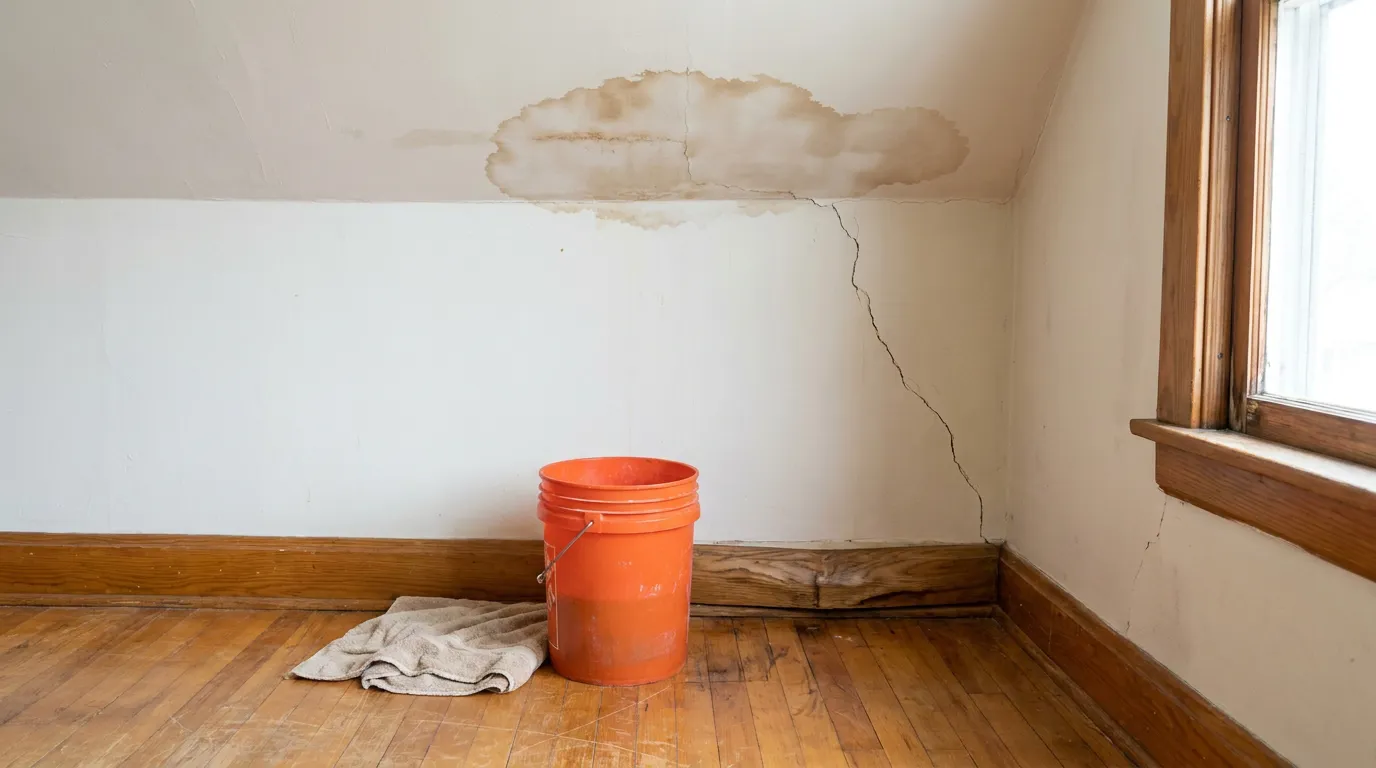
The Concurrent Cause Doctrine Basics Every Policyholder Should Know
The doctrine addresses a deceptively simple question: what happens when two forces damage the same property at the same time? The competing efficient proximate cause analysis asks a court to identify the single dominant cause and apply the coverage result that follows. Florida’s concurrent causation approach recognizes that real-world property damage doesn’t always fit that model, particularly in storm events where wind, rain, and water intrusion occur together and no single cause can fairly be labeled dominant.
Florida courts developed these principles largely through property damage litigation, including hurricane claims. Case law addressing multiple contributing causes, most commonly wind versus water, shaped the framework insurers and policyholders still argue over today. Outcomes tend to be fact-dependent rather than governed by a single bright-line test.
Why This Doctrine Matters More in Florida Than Elsewhere
Florida has historically been viewed as more favorable to policyholders on concurrent causation than jurisdictions applying efficient proximate cause as the default rule. Legal scholarship examining Florida judicial treatment of causation discusses how carriers responded by drafting increasingly aggressive exclusionary language into their forms. That may explain why two neighbors with similar damage can receive very different coverage determinations, since the doctrine applies only absent enforceable policy language displacing it.
Florida contract interpretation standards generally construe genuinely ambiguous policy language against the insurer that drafted it. Courts may scrutinize anti-concurrent causation clauses for ambiguity and have sometimes declined to apply them as broadly as carriers intended. That said, Florida courts have enforced clearly worded anti-concurrent causation provisions, so such a clause is a significant obstacle rather than a formality.
How Florida’s Valued Policy Law Handles Mixed-Cause Losses
Florida’s Valued Policy Law provides a specific rule for total losses involving more than one peril. Under Fla. Stat. § 627.702(1)(a), when a building insured against fire and other perils suffers a total loss caused by a covered peril, the insurer’s liability is generally the amount for which the property was insured. That full-payout rule is the starting point, not the ending point, and applies only to total losses.
The statute then carves out mixed-cause scenarios directly. Fla. Stat. § 627.702(1)(b) provides that when a total loss is caused partly by a covered peril and partly by a noncovered peril, the full-value rule does not apply, and the insurer’s liability is limited to the loss caused by the covered peril. The statute preserves the full payout if the covered perils alone would have caused the total loss, often the central battleground in hurricane claims.
The Legislature also built in a balancing provision. Fla. Stat. § 627.702(1)(b) states the intent is not to deprive an insurer of any proper defense, create new or additional coverage, or require an insurer to pay for a loss caused by a peril other than the covered peril. This is why apportionment fights, rather than all-or-nothing coverage fights, dominate many of these disputes.
💡 Pro Tip: Photograph interior and exterior damage separately, with timestamps, before any repairs. Apportionment disputes are frequently won or lost on whether the policyholder can show wind-created openings preceded water intrusion.
Deadlines That Can End a Claim Before Causation Is Ever Argued
No causation argument matters if the claim was reported too late. Fla. Stat. § 627.70132(2) provides that a claim or reopened claim is barred unless notice was given within one year after the date of loss, and a supplemental claim is barred unless notice was given within 18 months after the date of loss. These deadlines are found in Chapter 627 of the Florida Statutes. Because these periods were shortened by recent amendments, the deadline applying to an older loss may differ, and the policy’s own prompt-notice condition can operate independently of the statute.
For weather events, the date of loss is defined by statute rather than by when you noticed the damage. Fla. Stat. § 627.70132(3) ties the date of loss for hurricanes, tornadoes, windstorms, and severe rain to the date the event made landfall or was verified by NOAA. These statutory bars are applied as written, so assumptions about extensions carry real risk.
|
Type of Claim |
Statutory Notice Deadline |
|---|---|
|
Initial claim |
1 year from date of loss |
|
Reopened claim |
1 year from date of loss |
|
Supplemental claim |
18 months from date of loss |
The Insurer’s Corresponding Obligations
Florida law does not leave the timing burden entirely on the policyholder. Under Fla. Stat. § 627.70131(7)(a), within 60 days after receiving notice of an initial, reopened, or supplemental claim, the insurer shall pay or deny the claim or a portion of it, unless failure to pay is caused by factors beyond the insurer’s control. That exception matters, and carriers do invoke it. The deadlines may also be tolled in connection with a declared state of emergency.
The same provision requires a written, reasoned explanation. The insurer must provide a reasonable written explanation of the basis for the payment, denial, or partial denial, and if payment is less than specified in the insurer’s own detailed estimates, it must explain the difference in writing. In a concurrent-cause scenario where the carrier allocates only part of the damage to a covered peril, that written explanation may give you a documented basis to challenge the apportionment.
Common Ways Carriers Narrow Coverage in Multi-Cause Claims
Denial letters in mixed-cause claims tend to follow recognizable patterns. Recognizing them early may help you gather the right evidence before memories fade and repairs alter the scene. Frequent approaches include:
-
Attributing storm damage entirely to long-term deterioration rather than the weather event
-
Invoking an anti-concurrent causation clause to exclude the whole loss
-
Assigning a small percentage of damage to wind and the remainder to excluded water
-
Disputing whether the roof opening existed before the storm
-
Relying on an engineer’s report prepared without the policyholder’s input
Age-and-condition arguments deserve particular attention. Carriers often blend causation defenses with deterioration defenses, which is why reviewing how wear and tear exclusions operate alongside concurrent cause analysis can be valuable. Whether such an exclusion applies is generally a fact question resolved through inspection, documentation, and sometimes competing expert opinions.
One protection is worth knowing if you hesitate to report water intrusion. Fla. Stat. § 627.4133(6) provides that, for personal lines residential property policies, a single water damage claim may not be the sole cause for cancellation or nonrenewal unless the insurer can show the insured failed to take action reasonably requested to prevent a future similar occurrence. This does not prevent all adverse underwriting action or limit an insurer’s ability to consider multiple claims, but it addresses a common fear among Florida homeowners.
Bad Faith Requires a Condition Precedent
A denial you disagree with is not automatically bad faith. Under Fla. Stat. § 624.1551, a claimant pursuing a property insurance bad faith action must first have established, through an adverse adjudication by a court of law, that the insurer breached the contract, with a final judgment or decree rendered against it. That adjudication operates as a condition precedent.
Bad faith can arise from conduct such as unreasonable delay or refusal to investigate, but the statutory sequence still controls, and a mere failure to pay within the statutory deadlines does not by itself establish bad faith. The breach of contract case generally comes first. Our attorneys handle these disputes as Florida property insurance causation matters from initial claim review through litigation when necessary.
What Our Firm Has Recovered in Mixed-Cause and Storm Claims
Results in multi-peril claims often turn on independent estimating and persistent documentation. Prior outcomes do not predict future results, and every claim depends on its own facts and policy terms. Recent matters our attorneys have resolved include:
-
A denied water damage claim in Orange County, recovering $149,000.
-
An underpaid Hurricane Milton claim in Manatee County, recovering $125,000.
-
An underpaid roof and interior mold damage claim in Seminole County, recovering $215,000.
-
An underpaid Hurricane Helene claim in Orange County, recovering $150,000.
Frequently Asked Questions
1. Does the concurrent cause doctrine mean my whole claim is covered if any part was wind damage?
Not necessarily. The doctrine does not apply where the policy contains an enforceable anti-concurrent causation clause, and for total losses, Fla. Stat. § 627.702(1)(b) provides that when a loss is caused partly by a covered peril and partly by a noncovered peril, the insurer’s liability may be limited to the loss attributable to the covered peril, unless the covered perils alone would have caused a total loss. Apportionment analysis is fact-intensive.
2. What is an anti-concurrent causation clause?
It is policy language drafted to exclude a loss entirely whenever an excluded peril contributes to the damage, regardless of any covered peril’s role. Florida courts have enforced such clauses when the wording is clear, while examining them for ambiguity, so interpretation generally depends on the exact language in your policy.
3. How long do I have to report a hurricane claim in Florida?
Fla. Stat. § 627.70132(2) bars an initial or reopened claim unless notice is given within one year of the date of loss, and bars a supplemental claim unless notice is given within 18 months. For weather events, the date of loss is set by statute under Fla. Stat. § 627.70132(3). Different deadlines may apply to older losses governed by earlier versions of the statute.
4. My insurer paid less than its own estimate. Is that allowed?
The insurer must provide a reasonable written explanation of the difference under Fla. Stat. § 627.70131(7)(a). That written explanation can be a useful starting point for challenging how the carrier allocated damage between covered and excluded perils.
5. Can I still recover if the adjuster blames old roof deterioration?
Possibly. Age-related defenses and causation defenses are often raised together, and the outcome generally depends on inspection evidence, weather data, and the specific exclusion language at issue.
Protecting Your Position in a Multi-Cause Claim
Florida’s causation rules sit at the intersection of common-law doctrine, statutory text, and your policy’s particular wording. The concurrent cause doctrine may preserve coverage where a covered peril contributed to an inseparable loss and no enforceable anti-concurrent causation clause applies, while Fla. Stat. § 627.702(1)(b) may limit recovery in mixed-cause total-loss situations to the portion attributable to the covered peril. Statutory notice deadlines, the insurer’s 60-day response obligation with its stated exceptions, and the written explanation requirements all shape what leverage a policyholder may have. Because these disputes turn on engineering evidence and policy language, general information cannot substitute for a review of your own documents.
If an insurer has denied, delayed, or underpaid a claim involving multiple causes of loss, Kuhn Raslavich, P.A. is prepared to review your policy and the carrier’s explanation. Call 877-352-7767 or contact our team today to discuss your Florida property damage coverage concerns.
Disclaimer: This content is for informational purposes only and is not legal advice. Every case is unique, and results may vary. Consult an attorney about your specific circumstances.