


Why the Clock Inside Your Business Income Coverage Matters More Than You Think
Key Takeaways: The period of restoration in a Florida business interruption claim generally begins at the date of direct physical loss, often after a 24 to 72 hour waiting period, and typically ends when the damaged property should reasonably be repaired, rebuilt, or replaced. Critically, it measures how long repairs should have taken, not how long they actually took, which is why insurers and policyholders clash over the end date after hurricanes create permitting backlogs and contractor shortages. Business income coverage generally pays net profit plus continuing operating expenses, and may include extra expense, extended business income, and ordinance or law extensions, but it typically depends on an underlying covered physical loss. Federal disaster aid is generally not designed to replace lost profits, which can make your policy the primary recovery vehicle. Florida’s statutory timelines are separate concepts, including the one-year and eighteen-month notice deadlines under Fla. Stat. § 627.70132, the 60-day pay-or-deny duty under Fla. Stat. § 627.70131, and the five-year limitations period for suit on a written contract under Fla. Stat. § 95.11(2)(b), with breach of a property insurance contract addressed separately in Fla. Stat. § 95.11(2)(e). Because these statutes were amended in 2022 and 2023, the version in effect on your date of loss generally controls. Contemporaneous documentation of damage, permits, and supplier delays can help show that an extended restoration period was reasonable.
The period of restoration is generally the window your commercial policy pays lost business income after covered physical damage, beginning shortly after the date of direct physical loss and ending when the damaged property should reasonably be repaired, rebuilt, or replaced with similar quality. That second half drives most disputes: your policy typically pays for as long as repairs should have taken, not how long they actually took, measured against a hypothetical timeline insurers may estimate more optimistically than reality allows. For Florida business owners rebuilding after a hurricane, the gap between actual and “reasonable” downtime can mean six figures of uncompensated loss.
If a carrier has cut short your restoration period or undervalued your business income loss, the team at Kuhn Raslavich, P.A. is prepared to review your policy language and press for the full benefits you purchased. Call 877-352-7767 or contact us now to discuss your claim.
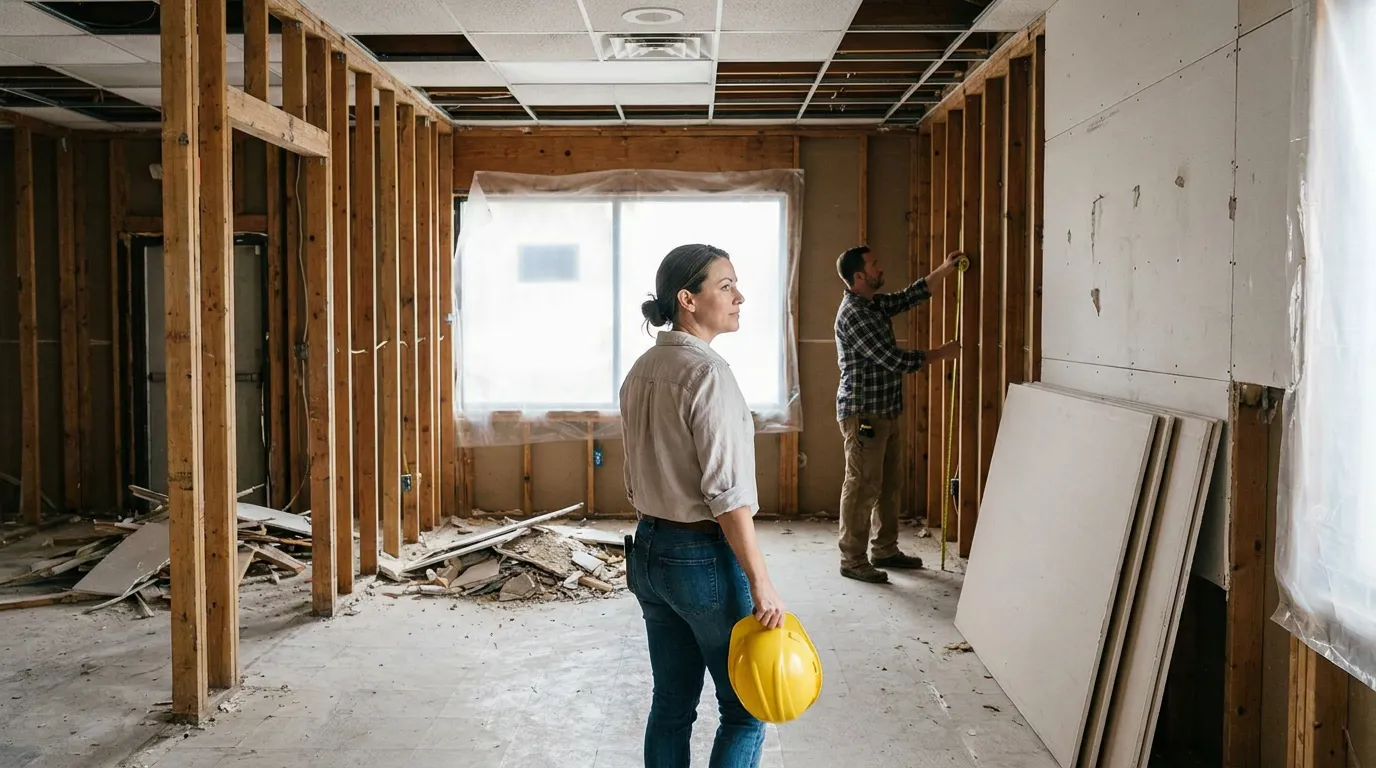
How the Business Interruption Period of Restoration Is Defined
The restoration period has two moving parts, a start date and an end date, each often negotiated separately. Legal scholarship generally describes the period of restoration as the time reasonably required to repair or rebuild damaged property and resume normal operations. National insurance regulators describe it similarly: business interruption insurance covers income lost after a disaster and pays during the time it takes to repair or replace the damaged property. Reviewing how the NAIC describes business interruption coverage can help you understand the baseline before reading your own endorsement.
The start date is usually tied to the date of direct physical loss, subject to a waiting period. Many forms impose a short waiting period, often 24 or 72 hours, before benefits accrue, and some apply a dollar deductible instead or in addition. Because the start date is anchored to physical damage rather than economic harm, losses from a storm that never physically damaged your building may fall outside coverage entirely.
The End Date Is Where Carriers and Policyholders Part Ways
Insurers and policyholders frequently dispute the end date, particularly when repairs stall because of permitting backlogs, contractor shortages, or supply chain delays. This recurs in Florida because hurricanes damage thousands of structures at once, overwhelming building departments and the contractor market. Whether these conditions count toward what is “reasonably required” to repair is often fact-dependent, turning on competing construction schedules, expert testimony, and documentary proof of permit filings. Many forms also state that the restoration period does not end when operations resume or the policy expires.
Courts interpreting ambiguous restoration-period language have generally construed genuine ambiguity in favor of the insured. Florida appellate and federal decisions have addressed disputes over restoration-period length, generally confirming the clause runs from the date of physical loss until repairs should reasonably be completed. That said, a clause is not ambiguous merely because a policyholder dislikes the result; courts typically require actual susceptibility to more than one reasonable reading, and unambiguous language is enforced as written.
What Business Income Coverage Actually Pays
Business income coverage generally replaces the net income you would have earned plus continuing normal operating expenses, not every consequence of the shutdown. Most forms calculate loss based on historical financial performance, adjusted for expected trends. Extra expense coverage, often bundled alongside, may reimburse costs incurred to avoid or minimize the shutdown, typically only to the extent those costs don’t exceed the loss avoided.
Commonly recoverable and disputed categories include:
-
Net profit the business would have earned during the restoration period
-
Continuing payroll, rent, loan payments, and other fixed operating costs
-
Extended business income after repairs finish, if your form includes that extension
-
Extra expense outlays such as temporary relocation or expedited shipping
-
Ordinance or law increased time of restoration, where code upgrades lengthen the rebuild
Each remains subject to policy limits, sublimits, exclusions, and conditions, and some are available only by endorsement.
This coverage is rarely sold alone. It’s typically packaged inside a Business Owner’s Policy or commercial package policy combining property and liability coverage, meaning your income claim depends on an underlying covered property loss. If the carrier denies the physical damage portion, the income portion often falls with it, which is why the two are commonly litigated together.
💡 Pro Tip: Ask your accountant to preserve monthly profit-and-loss statements, tax returns, and point-of-sale data for the three years before the loss. Carriers routinely demand this documentation, and gaps can shrink recovery even when coverage isn’t seriously contested.
Why Federal Disaster Aid Will Not Fill the Gap
Federal disaster programs generally are not built to replace lost business income, which is one reason the restoration period clause carries so much weight. FEMA guidance explains that business interruption losses are generally covered by insurance, and federal disaster assistance is not designed to duplicate that coverage. Understanding the scope of federal disaster assistance helps explain why your private policy is often the primary recovery vehicle after a Florida commercial loss. Program terms can change by disaster declaration, so confirm eligibility for your specific event.
Disaster loan and grant programs also operate on separate administrative tracks with their own eligibility criteria and timelines, distinct from a civil lawsuit against your insurer. Participation in one typically does not extend or alter deadlines in the other, treat them as parallel paths, not substitutes.
Florida Regulation of Commercial Property Insurance
Florida regulates commercial property insurers, and the statutory framework shapes how policies are rated and administered. Under Fla. Stat. § 627.0625(1)(a), “commercial property insurance” means insurance as defined in s. 624.604 limited to commercial risks, excluding windstorm coverage, flood insurance, federal crop insurance, crop hail insurance, and certain governmental pools. That definition determines which policies fall within specific regulatory provisions rather than setting terms of any individual policy.
Carriers also carry affirmative obligations toward commercial insureds. Fla. Stat. § 627.0625(3) requires insurers offering commercial casualty or property insurance to develop and make available risk management plan guidelines. Separately, Fla. Stat. § 627.215(2)(a) requires insurer groups to file a schedule of Florida loss and loss adjustment experience for the three prior years. These are regulatory filing duties owed to the state and insureds generally, they don’t themselves create individual claim benefits.
Claim Handling Deadlines Are Separate From the Restoration Period
Do not confuse the policy’s restoration period with Florida’s statutory claim-handling clock. Under the current version of Fla. Stat. § 627.70131, an insurer generally must pay or deny a claim within 60 days after notice, subject to exceptions including factors beyond the insurer’s control or a declared state of emergency. This 60-day period applies to claims under the 2022 amendment; earlier losses may follow the prior 90-day standard.
Separate deadlines govern when you must notify the carrier at all. Fla. Stat. § 627.70132 generally requires a claim or reopened claim be given within one year after the date of loss, and a supplemental claim within eighteen months, subject to exceptions. These shortened windows apply to losses on or after the 2022 amendment’s effective date; older losses were generally subject to longer two- and three-year periods. Missing these windows can jeopardize a claim regardless of how strong the damage evidence is. Businesses facing this layered timeline often benefit from consulting a lawyer early rather than after a denial letter arrives.
|
Concept |
Governing Source |
General Timeframe |
|---|---|---|
|
Period of restoration |
Your policy’s business income form |
Date of physical loss until repairs should reasonably be completed |
|
Notice of initial or reopened claim |
Fla. Stat. § 627.70132 |
1 year from date of loss |
|
Notice of supplemental claim |
Fla. Stat. § 627.70132 |
18 months from date of loss |
|
Insurer pay-or-deny duty |
Fla. Stat. § 627.70131 |
Generally 60 days from notice, subject to exceptions |
|
Suit on a written contract |
Fla. Stat. § 95.11(2)(b) |
5 years |
|
Suit for breach of a property insurance contract |
Fla. Stat. § 95.11(2)(e) |
5 years, measured from the date of loss |
The Statute of Limitations Is Not the Restoration Period
Florida’s five-year limitations period for written contracts is a different legal concept from the period of restoration. Fla. Stat. § 95.11(2)(b) provides five years for “a legal or equitable action on a contract, obligation, or liability founded on a written instrument.” For property insurance disputes specifically, Fla. Stat. § 95.11(2)(e) provides a five-year period for breach of a property insurance contract, running from the date of loss rather than the date of breach. This five-year window governs when you must file suit, it doesn’t address how long your carrier must pay business income benefits.
Tolling and delayed accrual arguments exist, but Florida courts have generally construed such exceptions narrowly. No policyholder should assume a discovery rule or tolling doctrine will automatically preserve a stale claim. Statutory notice deadlines, along with any suit-limitation clause in the policy, may bar a claim well before the five-year civil limitations period expires. The safer approach is to treat the earliest applicable deadline as controlling.
Bad Faith Requires a Condition Precedent
A statutory bad faith action against a property insurer in Florida has a threshold requirement many policyholders don’t anticipate. Under Fla. Stat. § 624.1551, an insured or beneficiary must have “established through an adverse adjudication by a court of law that the property insurer breached the insurance contract and a final judgment or decree has been rendered against the insurer” before bringing certain bad faith claims, and the statute preserves the separate notice and cure requirements of Fla. Stat. § 624.155. Bad faith can arise from unreasonable claim handling, but this condition precedent means the breach of contract case comes first, and it applies to claims arising on or after the statute’s 2022 effective date. Discuss court costs, fee exposure, and other litigation consequences with counsel given Florida’s 2022 and 2023 changes to one-way fee recovery in property insurance cases.
Practical Steps That Strengthen a Florida Commercial Claim
Documentation built in the first weeks after a loss can significantly influence a restoration period dispute years later. Photograph and video everything before cleanup, preserve damaged inventory where safely possible, and keep a dated log of every contractor call, permit application, and supplier delay. That contemporaneous record can help convert “the rebuild took eleven months” into evidence that eleven months was in fact reasonable. Most policies also impose post-loss duties, including prompt notice, mitigation, sworn proof of loss, and cooperation with examinations under oath.
Read your declarations page carefully for sublimits and extensions. Many business income forms cap recovery at a stated dollar amount, a number of months, or both, and extended business income provisions may add a limited tail after repairs conclude. Our firm handles Florida commercial property insurance disputes and regularly finds coverage extensions policyholders didn’t know they had purchased.
💡 Pro Tip: If your insurer’s adjuster proposes a restoration period shorter than your actual rebuild, request the written basis for that estimate, including any construction schedule or consultant report relied upon. Getting that reasoning in writing early can be valuable later.
Our attorneys have experience litigating denied and underpaid first-party property claims across Florida. Recent results include a recovery of $150,000 on an underpaid Hurricane Helene claim in Orange County, a $125,000 recovery on an underpaid Hurricane Milton claim in Manatee County, and a $299,200 recovery on an underpaid pipe leak claim in Seminole County. Past results do not guarantee a similar outcome in any other matter, because every claim depends on its own facts and policy language.
Frequently Asked Questions
1. When does the period of restoration begin in a Florida commercial claim?
Generally at the date of direct physical loss or damage, often after a short waiting period of 24 to 72 hours depending on your form. The precise trigger language varies by policy, so your declarations page and business income endorsement generally control.
2. What happens if permitting delays extend my rebuild beyond the insurer’s estimate?
Whether permitting and contractor delays extend the restoration period is frequently disputed and fact-dependent. Courts may consider whether delays were reasonably foreseeable and outside the insured’s control, and documentary proof of filing dates may carry significant weight. Some forms address code-related delay only through an ordinance or law extension.
3. Is the restoration period the same as my deadline to sue?
Generally no. The restoration period is a coverage measurement inside your policy, while Fla. Stat. § 95.11(2) sets a five-year limitations period for actions on a written contract, including a specific five-year period for breach of a property insurance contract measured from the date of loss. Statutory notice deadlines under Fla. Stat. § 627.70132 may bar a claim far sooner.
4. Can I recover business income if my building was not physically damaged?
Generally no, because most business income forms require direct physical loss to covered property as a trigger. Limited extensions such as civil authority or dependent property coverage may apply in narrow circumstances subject to their own conditions, time limits, and sublimits.
5. Does my insurer have to pay within 60 days?
Under the current version of Fla. Stat. § 627.70131, an insurer generally must pay or deny a claim within 60 days of notice, subject to exceptions including failure caused by factors beyond the insurer’s control or a declared state of emergency. That statutory duty is separate from the amount ultimately owed.
Bringing the Timeline Back Into Focus
The business interruption period of restoration is generally a coverage clock, not a court deadline. It typically starts with physical damage, runs for as long as repairs should reasonably take, and ends on a date carriers and policyholders often see very differently. Florida’s statutory framework layers additional timing obligations on top, from the notice windows in Fla. Stat. § 627.70132 to the pay-or-deny duty in Fla. Stat. § 627.70131 and the five-year limitations periods in Fla. Stat. § 95.11(2). Because these statutes have been amended in recent years, the version applicable to your date of loss matters. Outcomes depend on the specific policy wording, evidence of damage, and documented reasons for delay.
If your business income loss has been shortchanged by an unrealistically short restoration period, Kuhn Raslavich, P.A. is ready to review your file and explain your options. Reach our team at 877-352-7767 or visit our property damage law firm to get started today.
Disclaimer: This content is for informational purposes only and is not legal advice. Every case is unique, and results may vary. Consult an attorney about your specific circumstances.