


Understanding Florida’s Strictest Ground Damage Coverage Standard
Key Takeaways: Catastrophic ground cover collapse in Florida qualifies only when geological activity produces all four conditions in Fla. Stat. § 627.706(2)(a): abrupt collapse of the ground cover, a depression clearly visible to the naked eye, structural damage to the covered building including the foundation, and condemnation with an order to vacate from the authorized government agency. Missing even one element, most often condemnation, will typically defeat the claim, and damage consisting merely of settling or cracking is expressly excluded. Every insurer authorized to write property insurance in Florida must provide this coverage, while broader sinkhole loss coverage is optional, generally requires an additional premium, and may be conditioned on an inspection. Contents coverage applies when a qualifying catastrophic ground cover collapse occurs. Once verified, Fla. Stat. § 627.707(5) governs repairs and payment, including the insurer’s obligation to pay to complete recommended repairs or tender policy limits when repairs cannot be completed within policy limits. Carrier engineering reports frequently drive denials by attributing damage to long-term settlement or construction defects, making documentation, prompt written notice, and a full copy of your policy critical.
Catastrophic ground cover collapse is one of the narrowest coverages in Florida property insurance. Florida Statute § 627.706(2)(a) defines it as geological activity that results in all of the following: the abrupt collapse of the ground cover, a depression in the ground cover clearly visible to the naked eye, structural damage to the covered building including the foundation, and the insured structure being condemned and ordered to be vacated by the governmental agency authorized by law to issue such an order. Miss one element, and the loss generally does not qualify, even if the property damage is real and expensive.
If your carrier has denied or underpaid a ground collapse claim, Kuhn Raslavich, P.A. is prepared to review your policy and the carrier’s engineering reports. Call 877-352-7767 or contact us now to discuss your options.
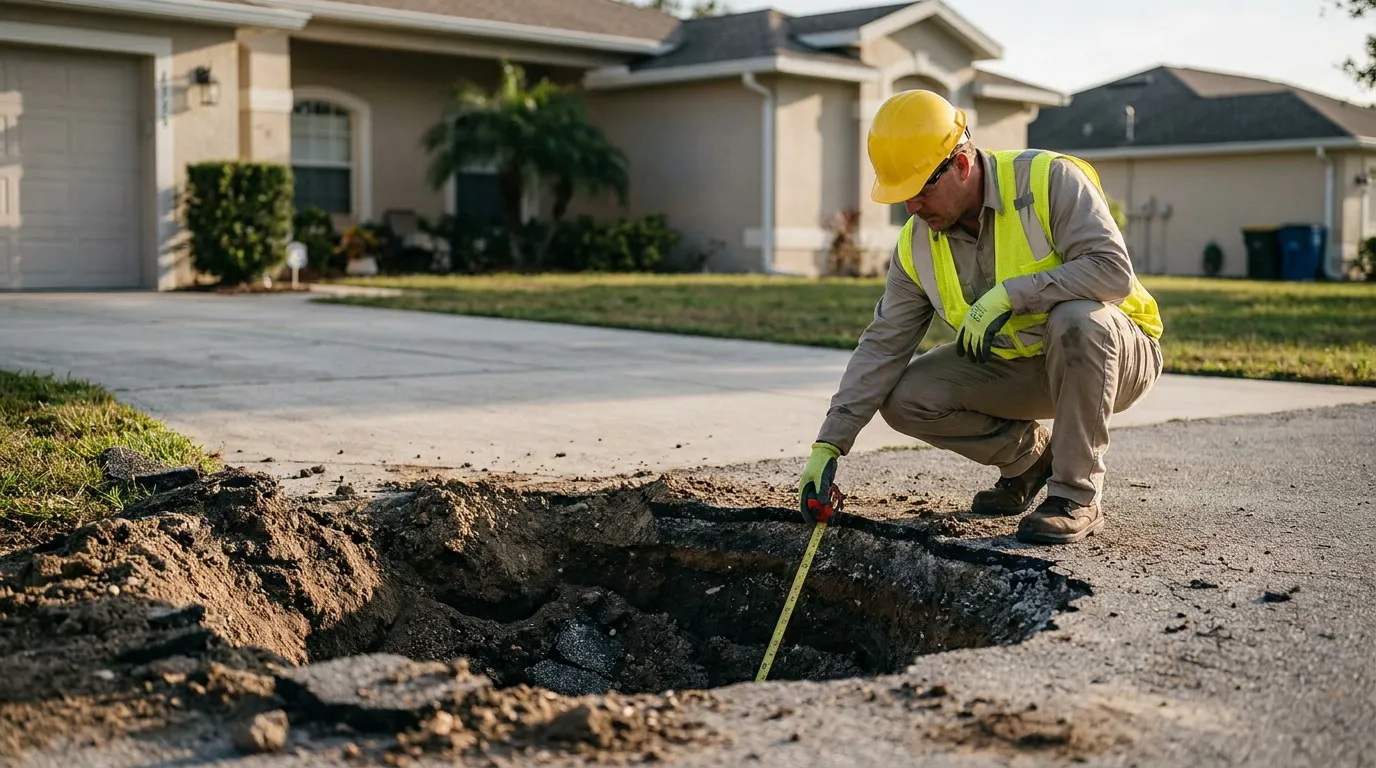
The Four Statutory Elements That Determine Whether You Qualify
Each element must be satisfied, making this a cumulative test. Florida Statute § 627.706(2)(a) uses the phrase "results in all the following," and courts and carriers read that language literally. A homeowner with dramatic cracking and a visibly sunken yard may still fall outside the coverage without government condemnation.
The four elements:
- Abrupt collapse of the ground cover. Sudden failure, not slow settlement over months or years.
- A visible depression. Must be clearly visible to the naked eye, not detectable only through instruments.
- Structural damage to the covered building. This includes damage to the foundation.
- Condemnation and an order to vacate. Must come from the governmental agency authorized by law to issue it for that structure.
Why the Condemnation Requirement Trips Up So Many Claims
The condemnation element frequently determines a denial. Under Fla. Stat. § 627.706(2)(a), the insured structure must be condemned and ordered to be vacated by the governmental agency authorized by law to issue such an order. Whether a particular municipal action constitutes a qualifying condemnation order is fact-dependent and may require legal analysis of the local code and the agency’s authority.
What "Settling or Cracking" Means for Your Claim
Ordinary or gradual damage generally does not meet the standard. Florida Statute § 627.706(2)(a) states that damage consisting merely of the settling or cracking of a foundation, structure, or building does not constitute a loss from catastrophic ground cover collapse. This is among the most common reasons carriers cite when rejecting claims. A denial framed as "mere settling" does not automatically end the analysis, as the underlying cause may still implicate other coverages, including optional sinkhole loss coverage if purchased.
💡 Pro Tip: Photograph and date the ground depression, interior damage, and any government notices the day you discover them. Conditions can change quickly, and contemporaneous documentation often carries more weight than reconstructions made months later.
How Catastrophic Ground Cover Collapse Florida Coverage Differs From Sinkhole Coverage
These are two distinct coverages, and confusing them can cost policyholders real money. Florida Statute § 627.706 addresses both sinkhole insurance and catastrophic ground cover collapse as related but separate perils. The Florida statutes governing property insurance set out both frameworks in Chapter 627.
| Feature | Catastrophic Ground Cover Collapse | Sinkhole Loss Coverage |
|---|---|---|
| Availability | Must be provided by every insurer writing property insurance in Florida | Must be made available for an additional premium |
| Cost | Included in the base policy | Additional premium applies |
| Inspection | Not conditioned on inspection by statute | Insurer may require an inspection before issuance |
| Threshold | Four cumulative statutory conditions | Structural damage, including damage to the foundation, caused by sinkhole activity |
Under Fla. Stat. § 627.706(1)(a), every insurer authorized to transact property insurance in Florida must provide coverage for catastrophic ground cover collapse. By contrast, Fla. Stat. § 627.706(1)(b) provides that insurers shall make available, for an additional premium, coverage for sinkhole losses and may require an inspection before issuance. If you never purchased the optional coverage, your only avenue may be the catastrophic ground cover collapse coverage built into your homeowners insurance.
The Legal Definition of Sinkhole Activity
Sinkhole activity has its own precise definition. Under Fla. Stat. § 627.706(2), sinkhole activity means settlement or systematic weakening of the earth supporting the covered building only if it results from contemporaneous movement or raveling of soils, sediments, or rock materials into subterranean voids created by the effect of water on limestone or similar rock formation. A sinkhole loss is structural damage to the covered building, including the foundation, caused by sinkhole activity. Sinkhole loss coverage is the broader of the two coverages, applying upon structural damage caused by sinkhole activity without requiring condemnation or the other cumulative conditions that make catastrophic ground cover collapse the narrower standard. These geological and structural definitions frequently become the battleground between competing engineering reports.
What Happens After a Loss Is Confirmed
Confirmation of the loss begins a second phase governed by repair and payment obligations. Under Fla. Stat. § 627.707(5), once a catastrophic ground cover collapse or sinkhole loss is verified, the insured is generally obligated to repair the damage in accordance with the insurer’s professional engineer’s recommendations, and the statute permits the insurer to limit initial payment to actual cash value until the insured enters into a contract for repairs. If the insurer’s professional engineer determines that recommended repairs cannot be completed within policy limits, the insurer generally must either pay to complete the repairs or tender the policy limits.
Contents are not forgotten. Florida Statute § 627.706(2)(a) states that contents coverage applies if there is a loss resulting from catastrophic ground cover collapse. Many policyholders overlook this and submit only structural figures, potentially leaving personal property recovery on the table. Our property insurance claims attorneys regularly see contents schedules that were never fully developed before a claim closed.
Common Challenges Policyholders Face
Carriers often retain their own engineers, and those reports tend to drive the coverage decision. The report may attribute damage to long-term settlement, poor drainage, construction defects, or organic soil rather than to abrupt geological activity. Policyholders may have the right to obtain their own engineering analysis and to challenge the methodology or conclusions of the carrier’s consultant, and Florida law also provides a neutral evaluation process for certain sinkhole claim disputes.
Practical Steps If You Suspect Ground Collapse Damage
Acting methodically in the first days after discovery may materially affect how the claim develops. Report the loss promptly and in writing, keep every notice from your building department, and preserve the property in its post-loss condition to the extent it is safe. Deadlines apply to Florida property insurance claims, including notice deadlines under Fla. Stat. § 627.70132 and the insurer’s obligations to pay or deny within the period set by Fla. Stat. § 627.70131.
Additional resources on coverage disputes are available in our Florida insurance claim articles, and the Florida Office of Insurance Regulation publishes consumer-facing information about carriers operating in the state.
💡 Pro Tip: Ask your carrier in writing for a complete copy of your policy, including all endorsements and the declarations page, before you argue about coverage. Whether you purchased optional sinkhole loss coverage often changes the entire analysis.
Frequently Asked Questions
1. Does my house have to be condemned to qualify?
Under Fla. Stat. § 627.706(2)(a), condemnation and an order to vacate from the governmental agency authorized by law to issue such an order is one of the four required conditions for catastrophic ground cover collapse. Whether a particular government action satisfies that element can be a contested question of fact and law.
2. Is catastrophic ground cover collapse coverage automatically included in my policy?
Florida Statute § 627.706(1)(a) requires every insurer authorized to transact property insurance in Florida to provide coverage for catastrophic ground cover collapse. Broader sinkhole loss coverage is different and generally must be purchased for an additional premium.
3. My foundation is badly cracked. Is that enough?
Generally, no. Florida Statute § 627.706(2)(a) expressly provides that damage consisting merely of the settling or cracking of a foundation, structure, or building does not constitute a loss from catastrophic ground cover collapse. Other policy provisions may still apply depending on the cause and your contract language.
4. Are my belongings covered?
Florida Statute § 627.706(2)(a) provides that contents coverage applies if there is a loss resulting from catastrophic ground cover collapse. The scope and limits depend on your specific policy terms.
5. What if repairs cost more than my policy limits?
Under Fla. Stat. § 627.707(5), if the insurer’s professional engineer determines recommended repairs cannot be completed within policy limits, the insurer generally must either pay to complete those repairs or tender the policy limits. How this plays out depends on the engineering findings and the policy at issue.
Where This Leaves Florida Homeowners
Catastrophic ground cover collapse is a real but narrow covered peril, and the statutory definition in Fla. Stat. § 627.706(2)(a) is demanding by design. Because all four conditions generally must be present, and because mere settling or cracking is expressly excluded, many serious ground damage claims are denied under this provision even when property damage is severe. Understanding the ground cover collapse meaning under Florida law, the separate framework for sinkhole activity, and the repair obligations in Fla. Stat. § 627.707(5) may put you in a better position to evaluate a denial letter rather than accept it.
If your ground collapse or sinkhole claim has been denied, delayed, or underpaid, the team at Kuhn Raslavich, P.A. is ready to help you evaluate your rights. Reach us at 877-352-7767 or request a case review today.
Disclaimer: This content is for informational purposes only and is not legal advice. Every case is unique, and results may vary. Consult an attorney about your specific circumstances.