


Experienced Storm Damage Claim Attorneys Serving Orlando and Central Florida
Storm season can turn a normal Orlando week into a mess of torn shingles, soaked drywall, downed fences, and surprise leaks that keep spreading. When a carrier slows the process or points to exclusions, an Orlando storm damage claim attorney can step in and push the claim toward a fair result supported by hard evidence.
Real progress usually comes from clear proof, careful timing, and a plan that matches Florida insurance rules. Good storm claims do not rely on guesswork or pressure tactics. Strong claims rely on facts, policy language, and a clean record that shows what happened and what it will take to fix it.
Homeowners are often at a disadvantage when trying to navigate the process effectively, but an experienced lawyer with Kuhn Raslavich Attorneys at Law can work to gather those facts and prove to the insurer you deserve every dollar your policy entitles you to receive.
How Storm Damage Claims Work in Orlando
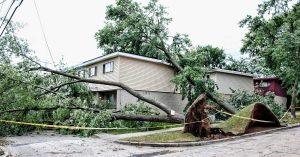 Orlando properties face unique stress during heavy weather. Fast-moving storms can drive rain sideways, force water under flashing, and create ceiling stains that appear days later. Big tree cover can also raise the risk of impact damage and broken limbs that hit roofs, screens, gutters, and HVAC lines.
A storm claim starts with the policy and ends with numbers. The coverage, exclusions, and deductibles control what gets paid, while the evidence controls what gets believed. Kuhn Raslavich will focus on connecting the damage to the storm event, then tying each repair cost to the policy language so the insurer cannot treat serious damage like a minor patch job.
A fair outcome often depends on how the carrier frames the loss. A storm damage claim lawyer will usually challenge early insurance company assumptions, such as calling a roof issue “wear and tear” when wind lifted materials and opened a path for water intrusion. Strong legal work also tracks how one failure point leads to another, because storms often cause layered damage that does not show up all at once.
Rules and Deadlines That Are Crucial to Your Claim
The State of Florida sets time limits for storm-related claims, and missing them can end the case before it starts. Policyholders generally cannot file a property claim (either reopened or new) unless the insurer receives notice within a year after the date of loss. In addition, state law bars a supplemental claim unless notice is given within 18 months after the date of loss.
The “date of loss” can matter more than people expect. For hurricanes, tornadoes, windstorms, severe rain, or other weather events, Florida’s statute ties the date of loss to landfall for a hurricane or to verification by the National Oceanic and Atmospheric Administration for other events.
Florida law also sets claim handling rules that can shape the pace of the file. Section 627.70131 of the Florida Statutes requires a residential property insurer to pay or deny an initial, reopened, or supplemental claim, or a portion of it, within 60 days after receiving notice. The only exception is if factors beyond the insurer’s control prevent payment.
Orlando Storm Damage Claim Attorney and the Coverage Fight
Storm claims often fail when the carrier treats each symptom as a separate problem rather than seeing a connected chain of damage. A careful review can show how a lifted shingle or cracked tile allowed water to move, how that water damaged insulation and framing, and how hidden moisture can later lead to mold concerns. Matching the timeline to the storm is vital to your claim because timing is a key tool carriers use to argue that damage resulted from age or old leaks.
A storm claim also needs the right category of loss. Flooding is a common issue in major storms, yet flood damage often falls outside a standard homeowners’ policy and may require separate flood coverage through the National Flood Insurance Program. A storm damage claim lawyer will sort out which part of the loss falls under the property policy, which may involve flood coverage, and how to document the line between wind-driven damage and rising water.
Coverage disputes also show up in the fine print. Some policies limit coverage for mold-related damage, roof surface matching, or certain types of water intrusion. Other policies include extra protections, such as coverage for code upgrades or debris removal, that can add real value when repairs trigger permit requirements and updated building standards.
Coverage Details That Change the Value of a Claim
Many storm claims rise or fall on a handful of policy provisions that people do not think about until damage hits. Deductibles are one example. Some Florida policies include a hurricane deductible that works differently from an “all other perils” deductible, and the timing and storm classification can affect which one applies.
Some policies start with actual cash value and pay the rest later, while others pay replacement cost if certain conditions are met. Depreciation, holdbacks, and required proof can all affect when money arrives and how much comes in the first check.
Additional coverage parts may come into play. Coverage for debris removal, emergency measures, and loss of use can support families who cannot live normally during repairs. Those benefits still require strong proof, and the claim file must connect each cost to the covered event and the policy terms.
Documents That Make a Storm Claim Stronger
A storm claim should tell one clear story from start to finish. Clear documentation protects the claim from shifting explanations and helps show the full scope, not just the first visible signs. Strong files often track damage over time, because storms can create slow leaks and hidden moisture that show up after the first inspection.
The most helpful records are practical and easy to verify. Insurance companies take a file more seriously when dates, photos, and costs line up cleanly. These records include:
- Written estimates that separate materials, labor, and code-related work.
- Receipts for temporary repairs and emergency services.
- Email or letter communications with the carrier, adjusters, and vendors.
- Reports that explain causation, such as why water entered and where it traveled.
Careful organization matters as much as the documents themselves. A good storm file makes it easy to answer the carrier’s favorite questions about when the damage started, what caused it, and why the proposed repairs are reasonable.
When a Claim Moves Toward a Lawsuit
Some claims resolve through better estimates and clearer information exchange. Other claims move toward formal dispute steps when the carrier will not change its position. Florida has a pre-suit notice process for property insurance lawsuits, and requires a notice of intent to initiate litigation at least 10 business days before filing suit. State law also sets rules for what the notice must include and requires the insurer to provide a written response within 10 business days of receiving the notice.
The legal environment has also changed in recent years. Florida lawmakers have addressed property insurance litigation and fee shifting in ways that can affect how disputes get evaluated and negotiated. An insurance coverage attorney will review the current rules, explain what they mean for leverage and cost, and build a strategy around realistic outcomes rather than slogans.
Court should not be the first stop, yet filing suit can be the step that forces the carrier to treat the claim seriously. Strong cases usually present consistent evidence, clear timelines, and reasonable repair pricing. Weak cases usually rely on assumptions, missing records, or damage that cannot be tied to the storm event.
Why You Should Choose an Orlando Storm Damage Claim Attorney With Kuhn Raslavich
Storm damage can feel overwhelming because the loss affects daily life while the insurance process moves on the insurer’s schedule. Our team will bring structure to that process, starting with a careful review of the policy and the claim record, then building a plan that keeps the carrier focused on the facts and the contract.
Storm damage can upend your home, your routine, and your sense of control, yet the claim process does not have to stay confusing or one-sided. Kuhn Raslavich will treat the evidence, the policy language, and the timeline like a connected system, then apply steady pressure where the record supports it. When the carrier refuses to handle the claim fairly, an Orlando storm damage claim attorney will be ready to pursue the full benefits owed under the policy. You can learn more about how we can help by scheduling a free case review. Please use our online form or call 407-501-4833 to get in touch.
How Kuhn Raslavich Builds Leverage in South Florida
Documentation wins claims. Kuhn Raslavich will gather pre-loss photos, permit histories, moisture readings, expert reports, and line-item estimates to tell a coherent story grounded in the policy’s language. Our team can convert that story into a demand that anticipates the carrier’s pushbacks.
Process control creates pressure. Our firm will calendar statutory deadlines, request claim file notes when available, and maintain written follow-ups on a predictable schedule. We will tie every delay to the statute and remind the carrier of its obligations under Florida law.
Results come from preparation. When the file provides credible support for cause, scope, and price, carriers have fewer excuses to cut or delay payment. A prepared attorney with our firm will present that support at the appraisal or in court if negotiation fails.
Frequently Asked Questions
Can temporary repairs be part of a storm claim?
Many policies cover reasonable emergency measures that protect the home from further damage, and receipts help prove those costs. A storm claim lawyer will review the policy language and the paper trail, then will argue for payment when the carrier tries to treat those charges as unnecessary.
Does homeowner’s insurance cover storm surge flooding?
Many homeowners’ policies do not cover flood damage, which is often covered by a separate flood policy. Sorting out wind damage from flood damage can be a major issue after severe storms.
What happens if the insurer offers too little to fix the damage?
Negotiation often starts with better documentation, clearer estimates, and a direct response to the carrier’s written reasons. When informal efforts fail, an insurance claim attorney will explain pre-suit notice steps and other options that Florida law may require before a lawsuit.
Reasons To Call Kuhn Raslavich
If you have suffered property damage as a result of water damage, fire, hail, or hurricane, CALL KUHN RASLAVICH FIRST…not your insurance carrier. Kuhn Raslavich charges no fees unless you get paid! We will deal with the insurance company on your behalf so you do not have to worry about setting up a claim or getting paid adequately. As an illustration of why hiring Kuhn Raslavich would be beneficial, consider this common occurrence:
- A hurricane badly damages your home.
- You call your insurance carrier who sends out one of their own adjusters to estimate the amount of damage.
- You accept the amount estimated by the insurance carrier, not knowing that it is extremely undervalued because the insurance company is trying to pay the least amount possible to settle your claim.
- As a result, you do not have enough money to repair your home properly.
We will come to your home and estimate the true value of the damage, which is often much greater than what the insurance company has determined. We will then gather all necessary paperwork and submit the claim to your insurance company. Once submitted, we help you along step by step and negotiate the claim in an effort to maximize your recovery.
Since filing a homeowner’s insurance claim is not a common occurrence, many homeowners do not know where to start. Many believe that their insurance company works for them, and is looking out for their best interest; however, insurers DO NOT represent homeowners and ARE NOT looking out for their best interest. Insurers are FOR PROFIT CORPORATIONS that are trying to pay the least amount possible to resolve claims.